
The world of aviation often conjures images of roaring engines and powerful jets, but there exists a more serene and elegant form of flight: gliding. Often described as the closest you can get to being a bird, gliding is a captivating dance between human ingenuity and the invisible forces . How do these sleek, engineless aircraft stay aloft, sometimes reaching incredible altitudes? Let’s delve into the art of gliding, drawing insights from experienced pilots and the fundamental principles that govern their silent ascent.
The Anatomy of a Silent Soarer
A glider, or sailplane, shares a visual resemblance with a single-engine airplane but boasts key differences. Its most striking feature is its long, slender wings, often spanning 40 to over 100 feet. This design prioritizes minimizing drag and maximizing lift, allowing the glider to make the most of any rising air it encounters. Typically featuring a tandem seating arrangement under a single, streamlined canopy, gliders are built for efficiency, designed to gracefully slip through the air.
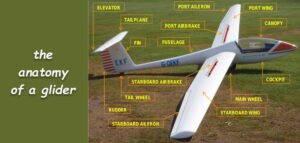
The Lift: Upward Push
Without an engine, gliders rely entirely on naturally occurring rising air to gain and maintain altitude – a technique known as soaring. There are three primary types of lift that glider pilots expertly harness:
-
Thermal Lift : On sunny days, the Earth’s surface heats up unevenly. Areas like parking lots, fields, and even buildings become pockets of warm air. This heated air becomes lighter and rises, much like the colorful blobs in a lava lamp. Pilots look for these invisible columns of rising air, called thermals, often indicated by puffy cumulus clouds. By circling within these thermals, a glider can gain significant altitude, as Amy Roberts experienced, climbing to an astonishing 9,000 feet over Virginia by riding a particularly strong thermal. The variometer, an instrument that senses changes in barometric pressure, is a crucial tool for detecting and staying within these upward currents. As Amy noted, entering a thermal often feels like a “bump in your seat” as the glider is pushed skyward.
-
Ridge Lift : When a strong wind encounters a significant obstruction like a mountain range or cliff, it’s deflected upwards. This ridge lift, or slope lift, provides a consistent upward current that gliders, hang gliders, and even birds can use to stay aloft for extended periods or travel long distances by “ridge soaring.” However, it’s important to remember that this lift is strongest closer to the obstruction and weakens further away.
Taking to the Skies: The Launch
Since gliders lack engines, they require an external force to get airborne. Common launch methods include:
- Aerotow: A powered airplane tows the glider into the air using a long rope. Once the desired altitude (typically 2,000-3,000 feet) is reached, the glider pilot releases the towline and begins their engineless flight.
- Winch Launch: A powerful winch on the ground rapidly pulls the glider along a cable, generating the speed and lift needed for takeoff. This method typically provides a lower initial altitude (around 2,000 feet) but allows pilots to immediately begin searching for lift.
- Ground Tow (Towhook): Similar to flying a kite, a glider can be towed from the ground by a vehicle using a winch. This method’s success heavily relies on encountering thermals quickly.
- Mountain/Hillside with Bungees: In some scenarios, elastic ropes are used to launch a glider from a slope, using the terrain to gain initial momentum.
- Self-Launching: Some modern gliders are equipped with retractable propulsion systems that allow them to take off independently.
The Silent Symphony of Flight
Once airborne, glider pilots utilize control surfaces – ailerons for roll, elevator for pitch, and rudder for yaw – much like their powered aircraft counterparts, to navigate and seek out rising air. The absence of an engine creates a unique and tranquil flying experience, allowing pilots to fully appreciate the subtle movements of the air and the stunning views.
Learning to fly a glider offers a profound connection with the atmosphere and hones piloting skills. Without the option of “going around” for another landing attempt, every approach demands precision and focus. It’s an immersive experience that can become deeply addictive, offering a sense of freedom akin to soaring with the birds.
Ready to Take the Plunge?
Gliding clubs around the world welcome newcomers eager to experience the magic of silent flight. A first lesson typically includes a briefing on glider operation and safety procedures, including the use of a parachute. Whether you dream of effortlessly climbing thousands of feet on a thermal or simply wish to experience the unparalleled peace of gliding through the air, this unique air sport offers an unforgettable adventure. So, if the idea of soaring on silent wings has ever captured your imagination, perhaps it’s time to turn those daydreams into reality and discover the art of gliding for yourself.